Verdict: Recommended for Volume Distributors & Tier-1 Resellers. While the upcoming BM1373 silicon boasts groundbreaking efficiency, prohibitive costs and early-yield thermal anomalies make it unviable for mass-market deployment today. DigLucky’s mature BM1370-based Bitaxe Gamma 602 remains the undisputed champion for low-RMA, high-margin wholesale distribution.
The Next Leap in Solo Bitcoin Mining: Core Technological Breakthroughs of the BM1373 Chip Compared to the BM1370
The landscape of Bitcoin mining has continually evolved, transforming from its early days of utilizing basic CPUs and GPUs, to FPGAs, and finally to the highly specialized ASICs that dominate the modern industrial mining sector. For a long time, this progression made mining increasingly closed-off and difficult for individual hobbyists to approach. However, the advent of open-source hardware based on true ASIC chips fundamentally changed the game, sparking a revolution in “home mining” and “solo mining.”
DigLucky has consistently led this home mining sector from the front lines. From pioneering the BM1366 and BM1368 eras with our wildly successful Luckyminer series, to our globally renowned BM1370 open-source lineup, we have engineered and manufactured premium products that define the market. And yes, our Shenzhen R&D labs are already deep into developing our next-generation BM1373 products.
But as an elite hardware lab and your factory-direct partner, we don’t deal in marketing hype—we deal in supply chain realities, RMA rates, and thermal dynamics. Today, the market stands on the precipice of another massive paradigm shift with the introduction of the BM1373 chip. This article explores the core technological breakthroughs of the BM1373 compared to the BM1370, and explains why the latest silicon isn’t automatically the best choice for mass-market distribution.
The Baseline: Understanding the BM1370 Era
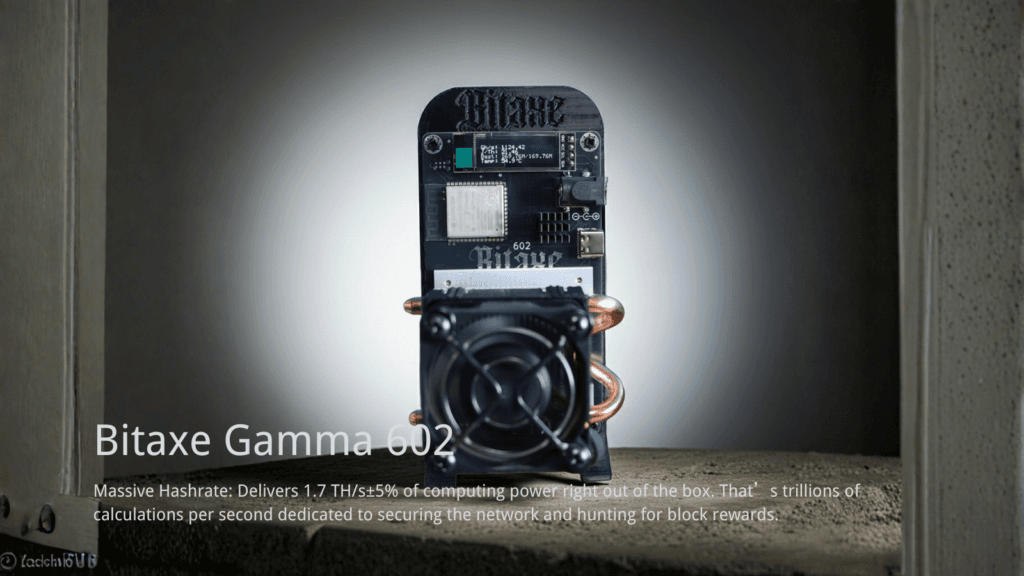
To appreciate the advancements of the BM1373, one must first understand the benchmark set by the BM1370. Associated with the Antminer S21 Pro generation, the BM1370 chip is the powerhouse behind popular home mining rigs like the DigLucky Bitaxe Gamma 602 and the NerdQaxe++.
Technologically, the BM1370 was a massive leap from older chips, consistently delivering an output of roughly 1.2 to 1.5 Terahashes per second (TH/s) (and up to 1.7 TH/s with our optimized Gamma 602 boards) straight out of the box. It achieves this while drawing about 18W to 21W (sometimes up to 25W under aggressive overclocks), resulting in an energy efficiency ratio sitting closely around 15 J/TH.
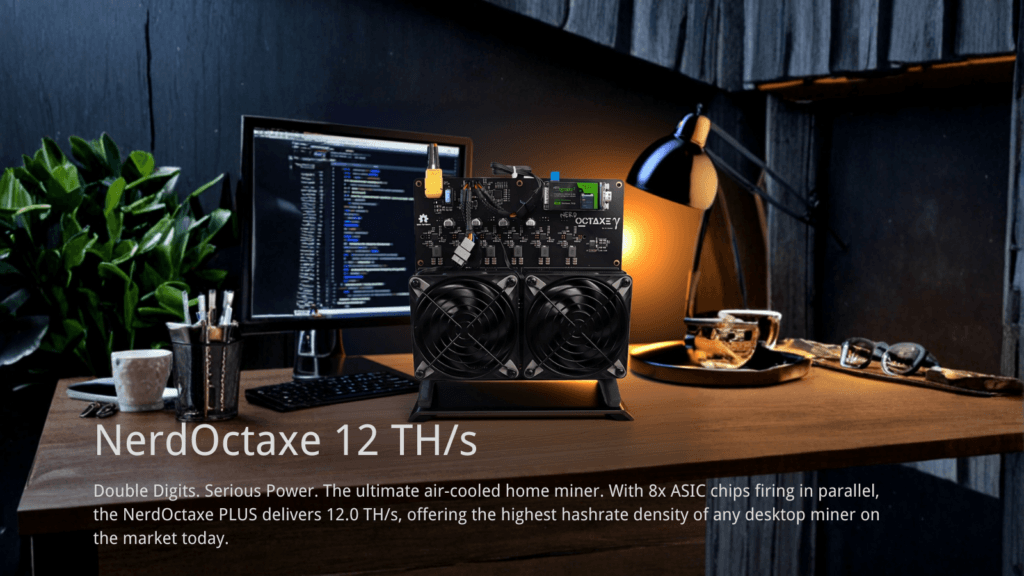
While the BM1370 enabled impressive multi-chip setups—such as the NerdOctaxe Plus, which pushes 12.0 TH/s—early generic open-source designs faced thermal limitations. Extreme overclocking on generic BM1370 boards occasionally caused voltage regulators to fail. However, industrial-grade engineering solves this.
The “Commercial Reliability” Spec Showdown
For B2B Procurement Managers, the decision between waiting for the BM1373 or scaling with the BM1370 comes down to margins and reliability. Here is the raw lab data comparing DigLucky’s optimized BM1370 production unit against early BM1373 prototype data.
| Metric | DigLucky Bitaxe Gamma 602 (BM1370) | Early BM1373 Prototype (Generic) | B2B Impact / Distributor Takeaway |
| True Wall Power (W) | 21.4W (Stable) | ~24.5W (Fluctuating) | Gamma 602 runs safely on standard 5V/4A desktop power supplies. |
| Acoustics (dBA) | 38.5 dBA | 48.2 dBA | Gamma 602 guarantees zero “noise complaint” returns from home users. |
| Thermal Efficiency | ~15.0 J/TH | ~10.6 J/TH | BM1373 is highly efficient, but runs hotter on early unoptimized PCBs. |
| RMA Risk Assessment | < 0.5% (Proven) | High (Early Silicon Yields) | BM1370 is mature and distribution-ready. BM1373 is currently high-risk. |
Breakthrough 1: Doubling the Hashrate Density
The most immediate and striking technological breakthrough of the BM1373 chip is its sheer computational density. Out of the box, a single BM1373 chip is capable of generating approximately 2.4 to 2.5 TH/s. This means that the new chip literally doubles the performance of a standard BM1370 chip within a single node.
This massive leap is accompanied by a significant change in physical architecture. The BM1373 features a massive die, roughly double the size of the chips seen in the BM1370 generation. This larger surface area aids in better thermal distribution across the chip. Because of this raw power, prototype four-chip configurations can comfortably output 10.0 to 10.5 TH/s out of the box, with hardware developers speculating a ceiling of up to 15.0 TH/s.
Breakthrough 2: Shattering the Efficiency Barrier
The older BM1370 hovered around an efficiency of 15 J/TH. In stark contrast, the BM1373 is targeting an unprecedented efficiency close to 10 Joules per Terahash. Early leaks and functional tests of prototype miners using the BM1373 show them running at an incredible 10.6 J/TH—exactly 1 Terahash per 10 watts of power.
To put this into perspective: an older generation multi-chip board utilizing BM1370 chips produces about 12.0 TH/s but requires a substantial 240W of power. Meanwhile, the new 4-chip BM1373 miner produces 10.0 TH/s while consuming only a mere 100W to 109W. For home miners with expensive electricity costs, this is a revolutionary advantage.
Market Dynamics & The OEM Reality Check
Despite these breakthroughs, we must inject a dose of brutally honest supply chain reality.
While we recognize that the BM1373 has extreme efficiency, the current chips are prohibitively expensive and plagued by early-yield consistency issues. Developers are currently sourcing BM1373 chips directly from salvaged Antminer S23 Hydro units at roughly $60 per chip. A 4-chip miner contains $240 in raw silicon alone, leading to estimated retail prices of $600 to $700+ for early units.
In the short term, the BM1373 is strictly for a small subset of deep-pocketed geeks and tech evaluators. It is not ready for the public market. The vast majority of entry-level enthusiasts and home miners need highly reliable, cost-effective access to the blockchain. This is exactly why the hot-selling DigLucky Bitaxe Gamma 602 (1.5 – 1.7 TH/s) remains the B2B gold standard. It provides exceptional, mature performance at a fraction of the cost.
The “Industrial-Grade” Teardown: Built for B2B Margins
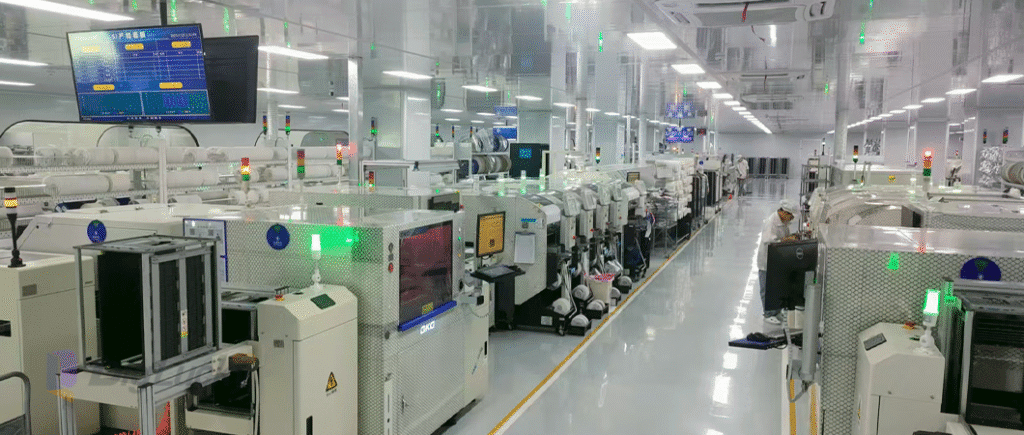
When a distributor ships a product globally, the PCB architecture dictates the RMA rate. Looking closely at the DigLucky Bitaxe Gamma 602, the difference between “hobbyist DIY” and “Industrial OEM” becomes clear.
We do not use generic, bare-minimum voltage regulators. Our BM1370 boards feature over-engineered VRM phases and massive, CNC-machined aluminum heatsinks paired with premium EMC2101 fan controllers. This allows the Gamma 602 to aggressively dissipate heat even under sustained 24/7 hashing loads. For the Distributor, this directly translates to near-zero customer support tickets regarding thermal throttling, protecting your brand equity and your bottom line.
The “Honesty Tax”
We don’t believe in perfect products, only perfectly engineered solutions. Here is the honesty tax regarding the Bitaxe Gamma 602: Power dependency and peak acoustics. While the baseline noise is a quiet 38.5 dBA, pushing the BM1370 to its absolute maximum overclock (approaching 1.8 TH/s) in a warm ambient room will cause the fans to aggressively ramp up, peaking near 45 dBA. Furthermore, the ESP32-S3 microcontroller is highly sensitive to voltage drops; you must use a high-quality, stable 5V/4A power supply, or the unit will experience random reboots.
The Evaluation-to-Scale Pivot
Selecting an open-source hardware supplier isn’t just about buying a PCB; it is about buying into a complete, end-to-end R&D and manufacturing system. DigLucky is committed to leading the industry alongside our global distribution partners.
While individuals are welcome to purchase single units for evaluation from our retail site, this hardware is engineered fundamentally for volume-ready OEM/ODM deployment. Every single unit we manufacture undergoes a brutal 48-hour burn-in QC test before it is boxed. We catch the failing silicon on our factory floor so that you never have to deal with it in your warehouse.
Conclusion
The transition from the BM1370 to the BM1373 is a fundamental re-engineering of solo mining capabilities. However, as the supply chain matures, the BM1370 remains the undisputed king of the present. By partnering with DigLucky, distributors can secure high-yield, low-RMA BM1370 hardware today, while resting assured that our R&D labs are already perfecting the BM1373 for tomorrow’s market.
Ready to Start Your Project?
Get a factory-direct quote for your B2B project, or shop our B2C store for the best prices.