In 2026, the decentralized mining sector is experiencing a significant paradigm shift. Home and office-scale network participation no longer requires industrial-grade electrical infrastructure, high-decibel noise, or unmanageable thermal output. The open-source desktop ASIC movement has successfully democratized SHA-256 cryptographic verification.
By utilizing sub-5nm industrial silicon optimized for localized deployment, devices like the Bitaxe Gamma 602 and the NerdQX function as active standalone network nodes rather than mere novelty gadgets. For bulk procurement managers, engineering labs, and regional distributors evaluating these platforms, this analysis breaks down the architectural performance, power dynamics, and manufacturing standards governing these two hardware form factors.
Engineering Overview
To accurately evaluate these devices, we must look at their core micro-architecture. Both platforms utilize the Bitmain BM1370 ASIC chip (the same silicon architecture deployed in enterprise Antminer S21 Pro systems), making them mathematically relevant participants in solo mining network verification.
- Bitaxe Gamma 602 Architecture: This device represents the entry-level standard for open-source hardware. It features a single-chip topology. By devoting its entire trace layout to a single BM1370 node, it achieves a highly efficient baseline hash rate with minimal peripheral component overhead.
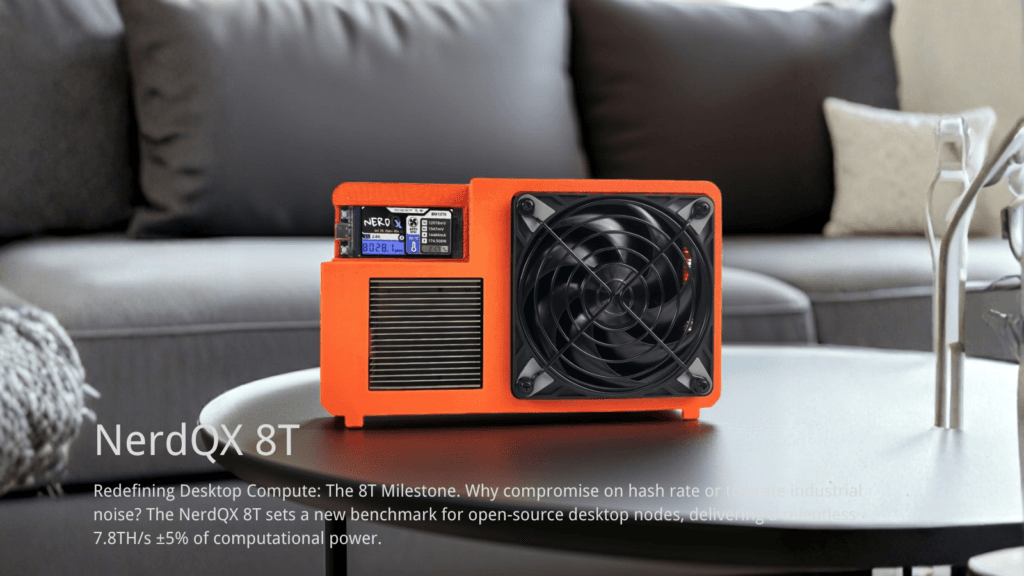
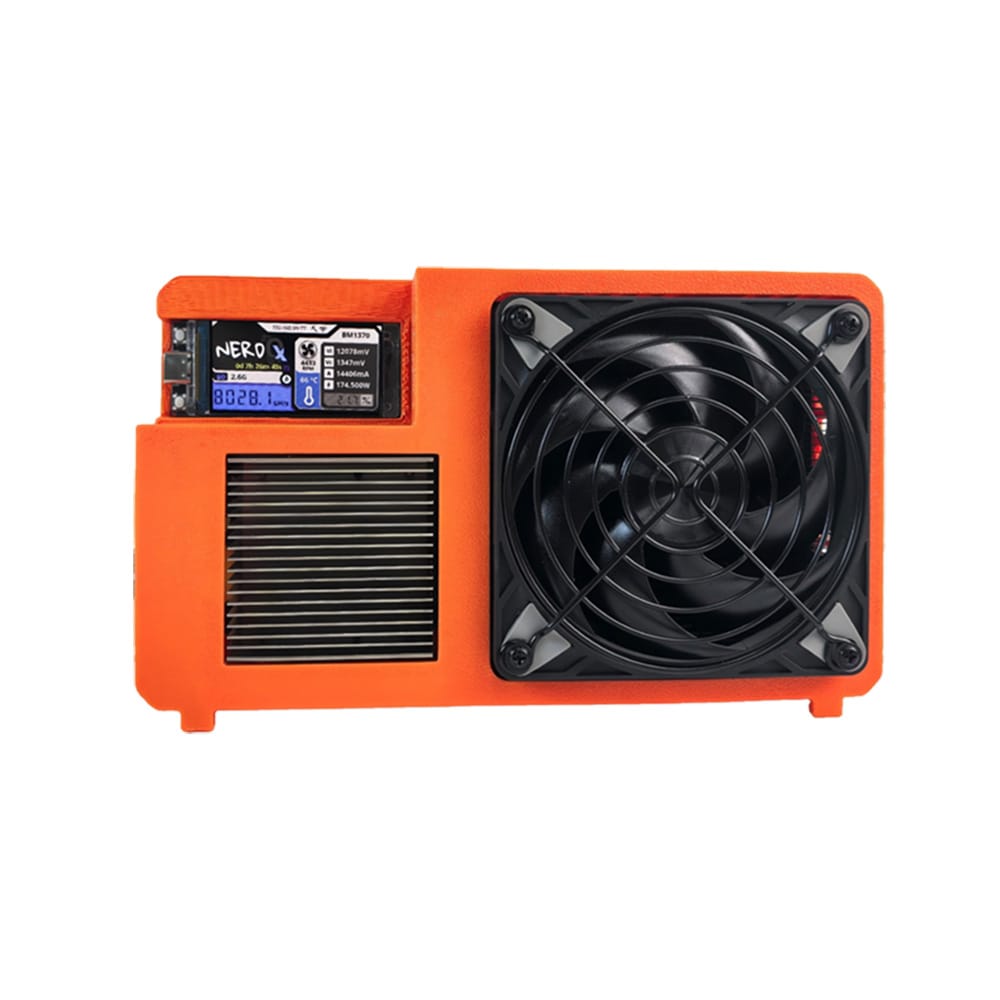
- NerdQX Architecture: This is the high-density upgraded sibling. It houses a multi-chip array comprising four synchronized BM1370 ASIC chips. This design vastly increases hash density per square centimeter but requires a completely re-engineered power delivery network (PDN) and active copper heat-pipe dissipation framework to manage the increased thermal load.
Hardware Specifications
The following engineering parameters are validated under factory burn-in conditions and cross-referenced with the official “DigLucky Global Distributor Pricing Matrix 2026 Q2”:
| Technical Feature | Bitaxe Gamma 602 V3.0 | NerdQX 8T (Enterprise Platform) |
| ASIC Chip Configuration | 1x Bitmain BM1370 | 4x Bitmain BM1370 |
| Calibrated Hashrate | 1.8 TH/s ±5% | 8.0 TH/s ±5% |
| Energy Efficiency | ~19.44 J/TH ±10% | ~15 J/TH – 20 J/TH |
| Input Power Interface | 5V DC / 8A Barrel Jack | 12V DC / Industrial XT60 |
| Power Consumption | ~35W ±10% | ~170W ±10% |
| Acoustic Profile | Active Cooling Fan + Heatsink | < 45dB (Auto PWM Fan + Heat-pipes) |
| On-Board Display | 0.96-inch OLED (I2C, Removable) | 1.9-inch Color LCD (LILYGO T-Display S3) |
| Firmware Environment | AxeOS (Open-Source Core Stack) | AxeOS (Open-Source Core Stack) |
| Wholesale MOQ Packaging | Master Box of 20 Units | Master Box of 10 Units |

Step-by-Step SOP: Node Provisioning & Deployment
To deploy either the NerdQX or Bitaxe Gamma 602 into an institutional lab or regional reseller testing environment, follow this Standard Operating Procedure:
1. Power Subsystem Verification
- For Bitaxe Gamma 602: Connect the included 40W factory-certified 5V/8A power adapter. Warning: Never attempt to plug a 12V source into the 5V barrel jack; this will immediately breach the over-voltage limits and destroy the PCBA.
- For NerdQX: Secure the dedicated 250W switching power supply to the gold-plated industrial XT60 connector. Ensure the physical connection is fully seated to prevent impedance heating at high currents.
2. Network Infrastructure & Stratum Binding
- Power on the unit. The integrated ESP32-S3 microcontroller will broadcast a local setup Wi-Fi access point.
- Access the setup portal via a web browser, locate your local 2.4GHz network, and enter the network credentials.
- Navigate to the firmware control panel (AxeOS WebUI) and configure your preferred SHA-256 mining pool stratum addresses (e.g., Solo CKPool or Public Pool) along with your secure Bitcoin wallet destination address.
3. Thermal & Hashrate Calibration
- Allow the device to run a 10-minute initialization phase.
- Monitor the WebUI or the integrated display to verify that the hashrate stabilizes at its rated output (1.8 TH/s or 8.0 TH/s) and that core chip temperatures remain safely below the thermal throttling threshold.
Technical Validation: Factory Manufacturing vs DIY Clones
When sourcing desktop open-source mining hardware, there is a strict divide between commercial-grade OEM products and unverified DIY workshop clones.
DigLucky Factory Standard
Our hardware assets are produced at our specialized Shenzhen manufacturing center under strict industrial SMT assembly procedures. Every single component—from the premium voltage regulator modules (VRMs) to the ESP32-S3 wireless microcontrollers—is placed using automated optical inspection (AOI) to ensure flawless solder joints.
Following assembly, all units undergo a mandatory 48-hour continuous thermal and hashrate burn-in test. This ensures total stability under full computational loads and guarantees our low target RMA rates (< 0.5%) for bulk B2B shipments.
Generic DIY Clone Risks
In contrast, secondary-market DIY clone kits are often hand-soldered or assembled in small workshops lacking rigorous quality control. Clones frequently skimp on thermal management, utilizing cheap low-conductivity thermal pads that cause the BM1370 silicon to exceed safe junction temperatures, leading to rapid chip degradation.
Furthermore, poor PCBA trace design and uncalibrated power delivery networks in generic clones lead to persistent voltage drops, resulting in high rates of rejected stratum shares, frequent firmware crashes, and localized board failures under 24/7 operation.
Common Mistakes in Desktop ASIC Deployment
- Power Supply Mismatch: Attempting to run the quad-chip NerdQX using non-certified, low-tier 12V adapters. The NerdQX draws up to 170W under peak frequency scaling; inadequate power delivery triggers current protection errors or causes power supply infant mortality.
- Enclosure Airflow Throttling: Operating enclosed desktop miners inside unventilated server cabinets or tightly packed office shelves. Desktop nodes rely heavily on consistent ambient air turnover to prevent heat-pipe saturation.
- Overclocking Without Voltage Calibration: Pushing the chip frequencies via AxeOS beyond factory settings without adjusting VRM voltages. This induces extreme phase imbalances and can permanently damage the silicon substrate.
FAQ & Troubleshooting
Q: When comparing the NerdQX vs Bitaxe Gamma 602, which device offers a more interactive telemetry interface?
A: The NerdQX provides a significantly enhanced user experience through its integrated 1.9-inch LILYGO color LCD screen. While the Bitaxe Gamma 602 utilizes a standard, compact 0.96-inch monochrome OLED to show basic node stats, the NerdQX screen dynamically tracks core speeds, accepted/rejected shares, network difficulty, total network hashrate, block height, and a real-time countdown to the next Bitcoin halving event.
Q: My device is showing a flatlined “0 TH/s” in the WebUI log console. How do I troubleshoot this?
A: First, access the AxeOS WebUI and review the system log output. If the logs report a failure to initialize the ASIC, turn off the machine and use a digital multimeter to measure the voltage across the core VRM test points on the PCBA. If the voltage measures 0V or falls significantly below the 1.15V target, the power phase has tripped. Check for short circuits or verify if the power adapter is maintaining its rated output under load.
Q: Why do these mini miners utilize open-source AxeOS instead of closed proprietary software?
A: Open-source architecture ensures complete telemetry transparency and eliminates hidden development fees or developer pool redirection common in closed-source alternatives. It allows system integrators and university labs to compile custom firmware configurations directly via the USB-C interface to fit specialized network security or educational requirements.
Factory Insight
At our Beijing R&D and Shenzhen SMT facilities, our engineering teams focus heavily on copper pour density and thermal via placement. Multi-chip designs like the NerdQX require advanced custom copper heat-pipe dissipation arrays and auto-calibrating PWM fans to safely exhaust heat away from the multi-ASIC substrate. By maximizing the heat-sinking capabilities of the PCBA itself, we achieve enterprise-grade stability within a localized, quiet desktop profile (< 45dB).
B2B Procurement Section
For commercial syndicates, regional resellers, and educational institutions scaling their decentralized edge infrastructure, DigLucky provides direct manufacturer procurement pipelines.
According to the official “DigLucky Global Distributor Pricing Matrix 2026 Q2“, our open-source fleet assets are structured around standardized wholesale Master Boxes to ensure predictable landed costs and maximized distributor margins:
- Bitaxe Gamma 602 Master Box: 1 Carton contains 20 individual units. Wholesale baseline price is $1,*00 per carton ($*0 per unit).
- NerdQX Master Box: 1 Carton contains 10 individual units. Wholesale baseline price is $3,*00 per carton ($3*0 per unit).
Logistics & Compliance
All bulk shipments are executed strictly under DAP (Delivered at Place) commercial terms, with premium global air freight fully included in the quoted Master Box baseline pricing.
To protect distribution margins, transaction settlement is handled seamlessly via corporate Local Bank Transfers (ACH for the US, SEPA for Europe, BACS for the UK), ensuring a 0% processing fee environment. Every unit is fully compliant with CE, FCC, UKCA, and RoHS certifications, ensuring frictionless international customs clearance and legal resale compliance within regional markets.
Final Recommendations
Procure the NerdQX if your client base demands a premium, highly interactive plug-and-play machine. With its quad-chip 8.0 TH/s density and superior color display, it offers excellent long-term future-proofing as network difficulty advances over time.
Procure the Bitaxe Gamma 602 if your organization requires an ultra-low-barrier entry point for entry-level hobbyist distribution, large-scale educational testing, or highly cost-effective node cluster deployment where centralized screen telemetry is unnecessary.
Ready to Start Your Project?
Get a factory-direct quote for your B2B project, or shop our B2C store for the best prices.