The Efficiency Paradox
In the consumer electronics world, “Performance” usually means “Faster.” In the Bitcoin mining industrial complex—and specifically on the DigLucky factory floor—”Performance” means Joules per Terahash (J/TH).
With the 2026 block reward sitting at 3.125 BTC and global energy prices fluctuating, the difference between a profitable miner and a paperweight is often just 0.05 Volts.
The BM1370 ASIC chip (a staple in high-efficiency modern mining) is a beast. Out of the box, it is often tuned by manufacturers for stability rather than efficiency. They over-provision voltage to ensure every chip in a batch works, regardless of silicon quality.
At DigLucky, we take a different approach. We hunt for the “Golden Curve.” Here is how we undervolt to maximize margins, and how you can apply these principles to your own hardware.
The Physics: Why Undervolting Works
The power consumption (P) of an ASIC is roughly proportional to the frequency (f) times the square of the voltage (V).

This formula is the Holy Grail of mining economics.
- Linear: If you drop frequency by 10%, you save ~10% power.
- Quadratic: If you drop voltage by 10%, you save ~19% power.
The Goal: Find the lowest possible voltage ($V_{min}$) capable of sustaining a target frequency without generating Hardware Errors (HW).
The Protocol: Step-by-Step Undervolting
Note: This guide assumes you are using a controller capable of fine-grain voltage adjustment (like our customized ESP32 controllers or modified commercially available control boards).
Phase 1: Establish the Baseline
Before you cut power, you must know your starting point.
- Standard VDD: 1.35V
- Standard Freq: 550 MHz
- Baseline Efficiency: ~22 J/TH
- Temperature: 65°C (PCB)
Phase 2: The “Walk Down” Strategy
Do not drop voltage immediately. The chip will crash. You must walk it down.
- Lock Frequency: Keep the global frequency fixed at 550 MHz.
- Decrement Voltage: Lower the Core Voltage (VDD) by 10mV (0.01V) increments.
- Soak Test: Run for 15 minutes after each drop.
- Observation: Watch the HW Error rate. Ideally, it should remain <0.01%.
- The Fracture Point: Eventually, you will hit a voltage (e.g., 1.22V) where the HW errors spike or a core drops offline.
- The Safety Buffer: Once you find the fracture point, raise the voltage back up by 15-20mV. This accounts for thermal fluctuations during the day.
Phase 3: Frequency Matching
Now that you have found the lowest stable voltage, you can actually lower the frequency slightly to enter the “Ultra-Efficient Zone.”
- Dropping to 475 MHz might allow you to drop VDD further to 1.15V.
- Result: Your hashrate drops by 15%, but your power draw drops by 35%.
- New Efficiency: <17 J/TH.
The Thermal Bonus
Undervolting doesn’t just save electricity; it creates a virtuous cycle.
- Lower Voltage = Less Heat.
- Less Heat = Lower Internal Resistance in the silicon.
- Lower Resistance = Less Wasted Power.
- Result: Fans spin down. The rig becomes silent. This is critical for our Home Mining customers.
How DigLucky Industrializes This (B2B Context)
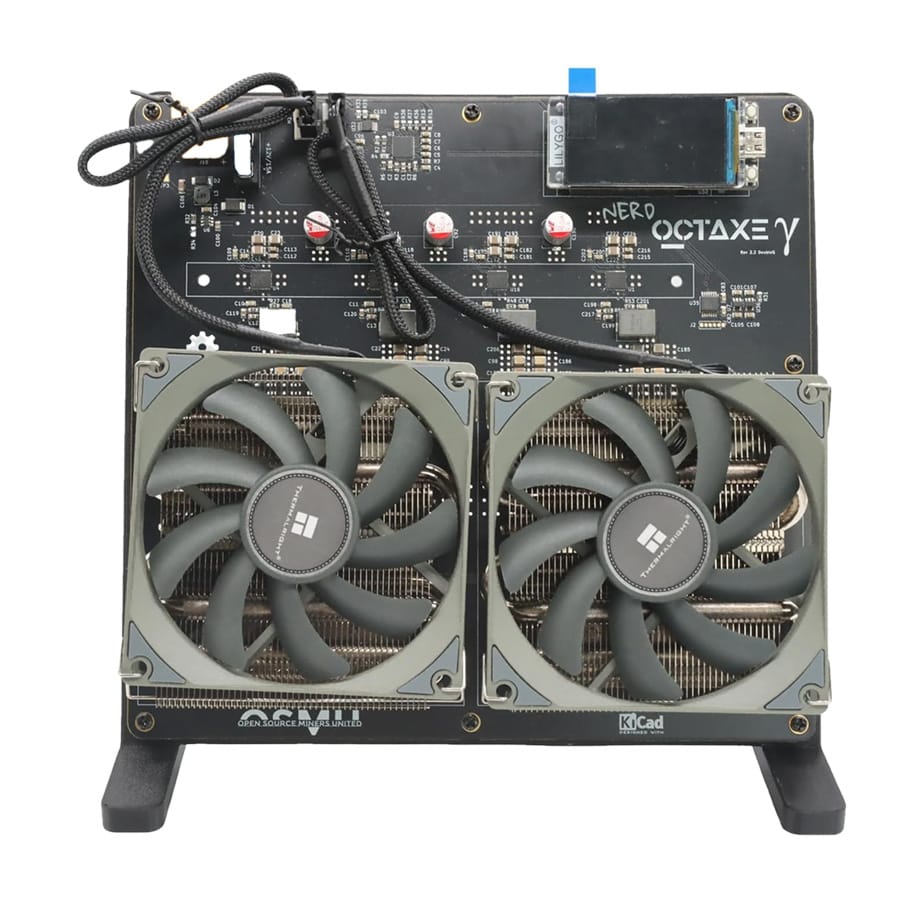
You can spend 4 hours tuning a single rig in your garage. But when a B2B client orders 500 units of the NerdOctaxe PLUS or custom BM1370 blades, they can’t manually tune each one.
This is where DigLucky’s “Smart-Binning” comes in.
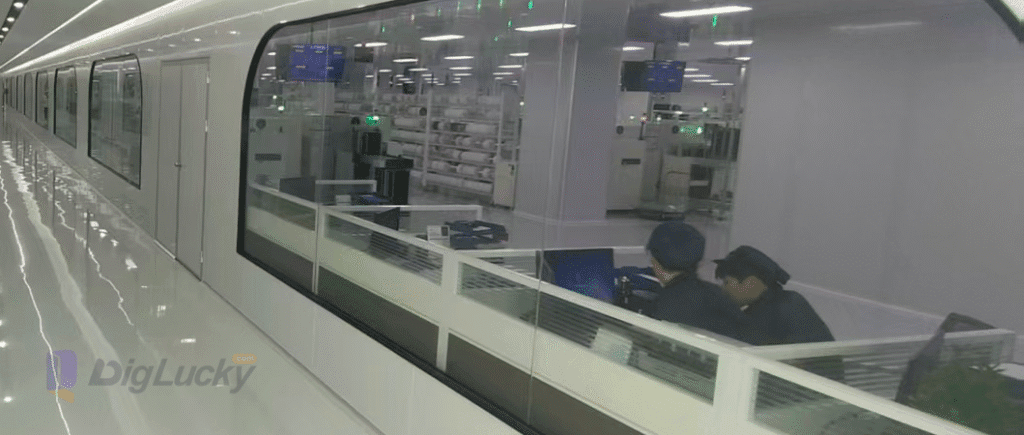
- Automated ASIC Profiling: Our Shenzhen test benches automatically sweep voltage ranges for every chip before it is soldered onto the final PCB.
- Grade A vs. Grade B:
- Grade A (The “Golden” Chips): Capable of running high frequencies at extremely low voltages. These go into our “Pro” and “Efficiency” lines.
- Grade B: Standard chips that require standard voltage.
- Custom Firmware: We flash a lookup table into the EEPROM that tells the controller exactly what voltage to apply for a given frequency profile.
The Factory Advantage: When you buy a DigLucky factory-direct unit, you aren’t getting “Stock” settings. You are getting a unit that has already been effectively undervolted and stabilized at the factory level.
Conclusion: Profit is in the Margins
In 2026, mining is no longer a “plug and pray” game. It is a game of millimeters.
By undervolting, you transform a loud, hot, break-even device into a silent, profitable, long-term asset. Whether you are hacking a single Solo Miner on your desk or managing a small farm, respect the $V^2$ curve.
🛒 Optimize Your Setup
For Bulk Buyers: Need 100+ units pre-tuned for <18 J/TH efficiency? We can customize the voltage profiles at the factory to match your electricity costs. 👉 Request an OEM Efficiency Quote
For DIY Geeks: Want to try this on the latest hardware? Grab our Magic Miner series, which features unlocked voltage control for advanced users. 👉 Shop MagicMiner Series
Ready to Start Your Project?
Get a factory-direct quote for your B2B project, or shop our B2C store for the best prices.