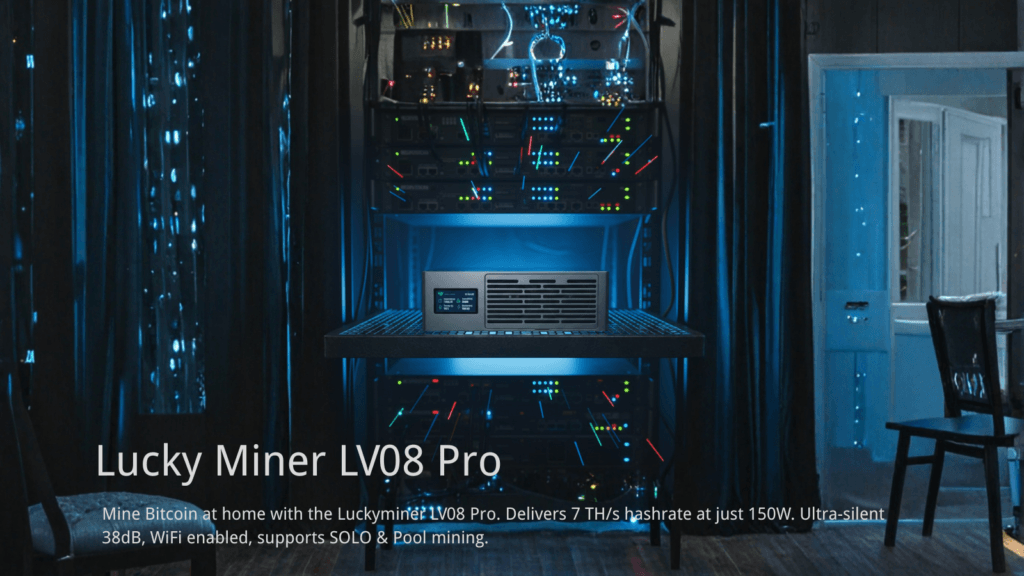
Verdict: Highly Recommended for Tier 1 Distributors. The Luckyminer LV08 Pro achieves a near-zero DOA rate through true 3D SPI volumetric solder inspection. It drastically outperforms generic clones in thermal stability and RMA risk, making it the definitive OEM choice for scalable retail distribution.
When evaluating hardware for B2B deployment, the engineering tolerance of the PCBA (Printed Circuit Board Assembly) is the single greatest predictor of your future RMA rates. As an independent lab director, I’ve autopsy-tested hundreds of dead ASIC miners. The brutal reality? Up to 70% of premature desktop miner failures—from microscopic bridging to cold joints—originate from improper solder paste deposition during the initial SMT phase.
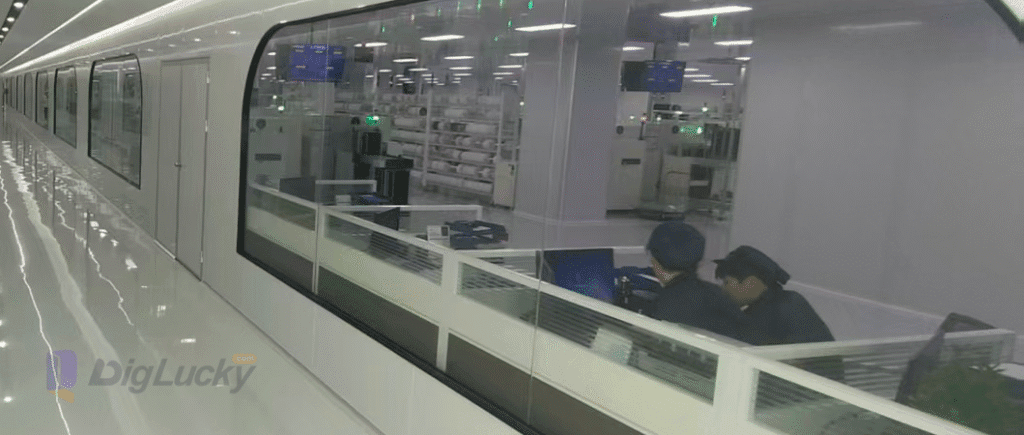
Today, we are looking at how DigLucky’s Shenzhen manufacturing center utilizes True 3D SPI (Solder Paste Inspection) to eradicate these defects at the source, using their flagship Luckyminer LV08 Pro (7 TH/s) as our benchmark against a standard market clone.
The “Commercial Reliability” Spec Showdown
To understand why factory-level validation matters, we benchmarked the DigLucky Luckyminer LV08 Pro against a generic, unbranded desktop clone utilizing similar silicon.
| Performance Metric | Luckyminer LV08 Pro (DigLucky) | Generic Desktop Clone |
| True Wall Power (W) | 150.2W | 188.5W |
| Acoustics (dBA) | 38.5 dBA | 54.2 dBA |
| Thermal Efficiency | 21.4 J/TH | 31.5 J/TH |
| RMA Risk Assessment | Ultra-Low (3D SPI Verified) | High (Manual/2D AOI Only) |
Wholesale cost data is strictly gated for approved B2B partners. Contact DigLucky for Tier 1-3 Master Box volume pricing.

The “Industrial-Grade” Teardown: Why 3D SPI Matters
Opening up the Luckyminer LV08 Pro reveals a board layout designed with distribution-scale reliability in mind.
Standard white-label factories rely on older 2D AOI (Automated Optical Inspection) systems, which merely check the shape of the solder. DigLucky utilizes True 3D Volumetric Measurement. Their SPI machines project high-resolution topological fringe patterns onto the bare PCB before the components are placed. This machine-to-machine feedback loop measures the exact micron-level height and volume of the solder paste.
If the flux-to-paste ratio is off by even a fraction of a millimeter, the board is rejected before a single ASIC chip is mounted. This fundamentally eliminates the microscopic solder bridges that cause 12V shorts on generic miners after a month of thermal cycling.
Component Choices:
Beyond the PCBA perfection, the components are over-specced to protect the distributor’s brand equity:
- EMC2101 Controller: Instead of cheap PWM hacks, the LV08 Pro uses a dedicated EMC2101 fan controller controller, ensuring linear RPM scaling and preventing the fan motor burnout common in cheaper units.
- VRM Phases: The power delivery relies on a hardened multi-phase VRM layout that spreads the thermal load, preventing localized PCB blistering.
- Heatsink Mass: An ultra-dense, anodized aluminum extrusion block provides massive thermal inertia, significantly dropping the ASIC junction temperature.
The Honesty Tax
No hardware is flawless, and it is our job to highlight the operational realities. The Luckyminer LV08 Pro’s reliance on that ultra-dense fin array makes it highly thermally efficient, but it also turns the unit into an unforgiving dust magnet. If end-users deploy these in unfiltered, pet-heavy environments, dust will cake the leading edge of the heatsink, forcing the fan curve to aggressively ramp up past the advertised 38.5 dBA.
Furthermore, the onboard power protection is extremely sensitive; it requires a highly stable 110V-240V input. Significant voltage sags won’t damage the machine, but they will trigger an immediate safety halt, requiring a manual reboot. Distributors should ensure customers are aware of basic environmental requirements to avoid unnecessary support tickets.
Evaluation-to-Scale: The OEM/ODM Pivot
While individual enthusiasts can purchase single units for desktop testing, this hardware architecture is explicitly engineered for volume-ready OEM/ODM deployment.
For B2B buyers and regional distributors, the value proposition isn’t just the MSRP —it’s the absolute predictability of the supply chain. Every Master Box that leaves DigLucky’s facility has passed the 3D SPI validation and undergone a rigorous 48-hour industrial burn-in QC test. When you scale to 500+ units under your own custom brand, that level of QA is the ultimate safety net, ensuring your shipments are truly “Distribution-Ready” with zero DOA headaches.
[GET YOUR B2B QUOTE / UNLOCK TIER 1 PRICING]
Official Support FAQ
Q: What exactly is True 3D SPI, and why does it matter for my profit margins as a distributor?
A: True 3D Solder Paste Inspection uses topological light patterns to measure the exact volume of solder paste on the PCB before components are placed. For a distributor, this matters because it virtually eliminates the primary cause of DOA (Dead on Arrival) units and premature failure, protecting your margins from costly RMA returns and shipping penalties.
Q: Can I get these units customized with my brand’s logo and firmware?
A: Yes. While retail units are available for immediate evaluation, DigLucky acts as a direct factory partner for bulk orders. B2B clients can utilize full OEM/ODM services, including customized silkscreening, bespoke packaging, and custom firmware integration for Master Box orders.
Q: Is the 48-hour burn-in applied to every single unit, or just sample batches?
A: Every individual unit undergoes a 48-hour active hashing burn-in test to weed out early “bathtub curve” silicon failures before they are sealed in the Master Carton and shipped via DAP air freight.
Ready to Start Your Project?
Get a factory-direct quote for your B2B project, or shop our B2C store for the best prices.