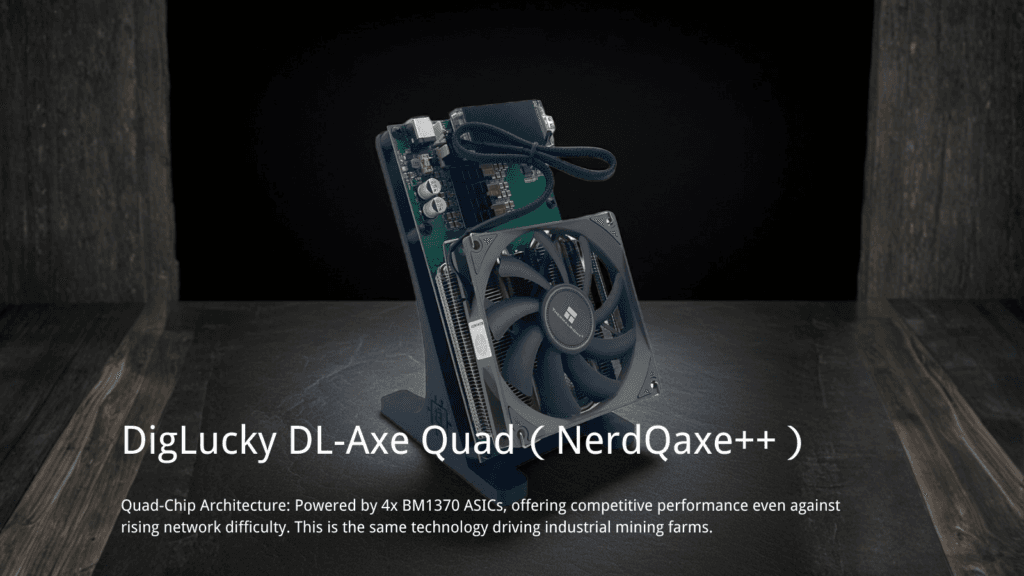
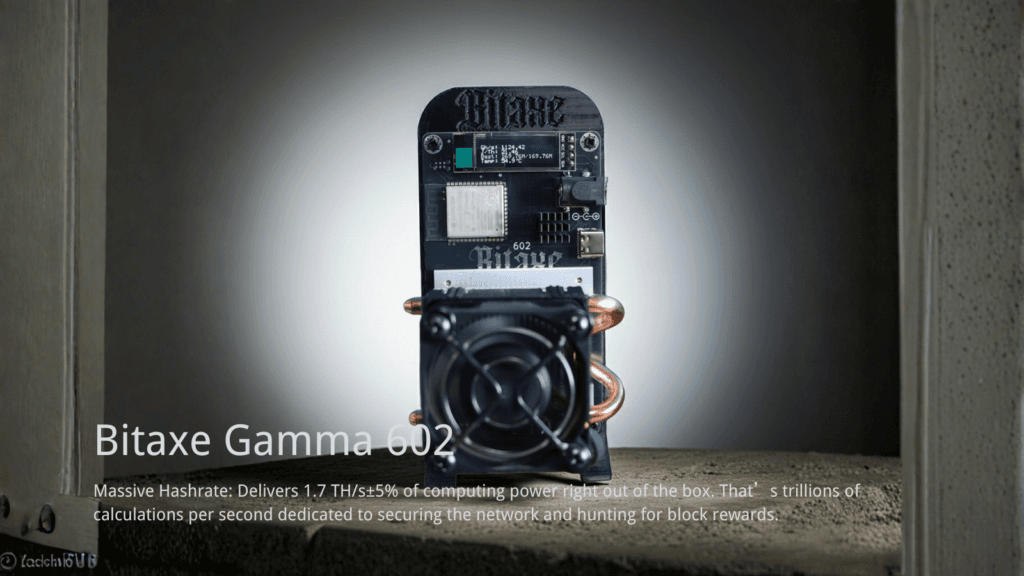
In the world of Solo Bitcoin Mining, there is the adrenaline-pumping thrill of single-handedly finding a block, and then there is a different kind of joy reserved strictly for hardcore hardware geeks: squeezing every last drop of performance out of a piece of silicon.
As the flagship chip of the open-source mining ecosystem, Bitmain’s BM1370 ASIC (the core of the Bitaxe Gamma and Antminer S21 Pro) has become the ultimate canvas for hardware enthusiasts. Out of the box, its standard hashrate hovers between 1.0T and 1.2T. But for hardware fanatics who refuse to settle for factory settings, this is merely a warm-up.
Through extreme circuit design and thermal modifications, the hashrate of a single BM1370 is being successfully pushed to 1.5T, with the industry now engineering towards a terrifying 1.8T.
Let’s dive deep into the engineering teardown: How do we break the conventional rules of physics and master extreme overclocking on the BM1370?
📌 Key Takeaways for BM1370 Overclocking
- Default Performance: 1.0T – 1.2T Hashrate | ~15-18W Power Draw | ~15 J/TH Efficiency.
- DigLucky Safe Overclock: 1.5T (Achieved via precise PDN tuning and chip binning).
- Next-Gen Target (Gamma 602): 1.8T stable with advanced pin-fin thermal solutions.
- Theoretical Physical Ceiling: 2.0T – 2.2T (Before silicon breakdown / electromigration).
- Main Bottlenecks: Power Delivery Network (PDN) stability and extreme thermal density.
1. The Voltage Wall: Pushing the BM1370 Hashrate Limit
The essence of hashrate is the switching speed (frequency) of the logic gates inside the chip. To make the BM1370 run faster, the most direct method is to increase the core voltage (Vcore) and the clock frequency.
However, this is the first physical wall geeks face. According to the classic CMOS dynamic power formula:
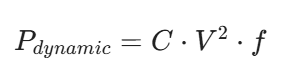
When pushing the hashrate from 1.2T towards 1.8T, you must increase the voltage to maintain signal integrity at high frequencies. Because power consumption scales with the square of the voltage, power draw explodes exponentially. At this stage, the energy efficiency ratio (J/TH) inevitably drops.
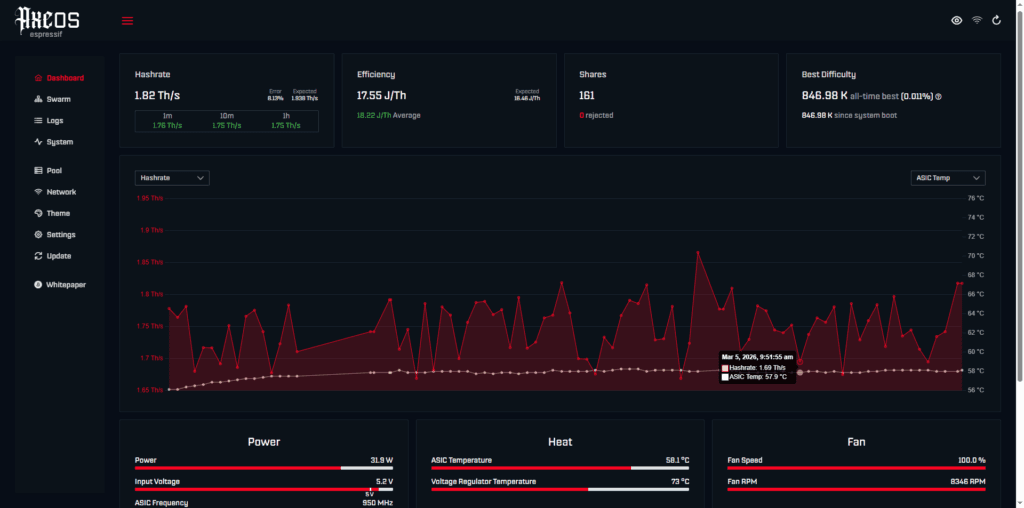
The core of this extreme tuning lies in using precise AxeOS custom firmware to probe the physical limits of a specific chip’s silicon lottery. Engineers adjust values in millivolts (mV) to find the exact tightrope where voltage and frequency peak just before a system crash.
2. Thermal Throttling: Cooling an Overclocked BM1370
The BM1370 utilizes an advanced manufacturing process, resulting in an incredibly small Die area. When a single chip erupts with 40W or more of heat at a 1.8T hashrate, its surface thermal density reaches terrifying levels.
- The Leakage Current Trap: The physics of silicon dictate that once the Junction Temperature breaches 90°C, static leakage current rises exponentially. This triggers a deadly thermal runaway spiral: Higher Temp -> More Leakage Current -> Higher Power Draw -> Even Higher Temp.
- Advanced Thermal Solutions: A traditional passive aluminum heatsink and a loud fan are severely inadequate past 1.5T. To prevent thermal throttling, high-end players must introduce custom Vapor Chambers, direct-die liquid cooling blocks, or even submerge the entire PCB in fluorinated fluids for Immersion Cooling. This utilizes phase-change latent heat to strip extreme thermal loads away from the chip.
3. Power Delivery Network (PDN): The Key to 1.8T Stability
Many believe overclocking is simply dragging a slider in the software interface, but the true bottleneck is almost always the PCB circuitry.
To support a 1.8T hashrate on a single chip, the Power Delivery Network (PDN) must provide massive, flawlessly clean current (often exceeding 100 Amps) at extremely low voltages.
Under such extreme loads, even a few millivolts of voltage ripple or transient voltage droop (Vdroop) will cause the chip’s internal Phase-Locked Loop (PLL) to lose its lock. This instantly triggers Hardware Errors (HW Errors) or a complete system crash. This demands a rock-solid VRM (Voltage Regulator Module) designed with top-tier capacitor arrays and ultra-low resistance MOSFETs.
4. The Physical Ceiling: Why 1.8T is the “Golden Sweet Spot”
Extreme overclocking isn’t about raising the frequency endlessly. Does the BM1370 have a hard software lock? No. Its ceiling is defined purely by the laws of semiconductor physics.
Engineering data suggests the absolute physical ceiling of a single BM1370 chip lies somewhere between 2.0T and 2.2T. If one uses extreme measures (like cryogenic LN2 overclocking) to force it higher, it might briefly touch 2.4T—but it will be on the absolute edge of silicon breakdown. As the chip reaches these critical points, internal timing margins are exhausted, turning processing power into invalid calculations (Rejected Shares), while extreme heat and voltage cause rapid electromigration, permanently killing the chip.
This is why 1.8T is considered the ultimate “Golden Sweet Spot” at the boundary of engineering and physics.
The DigLucky Manufacturing Advantage
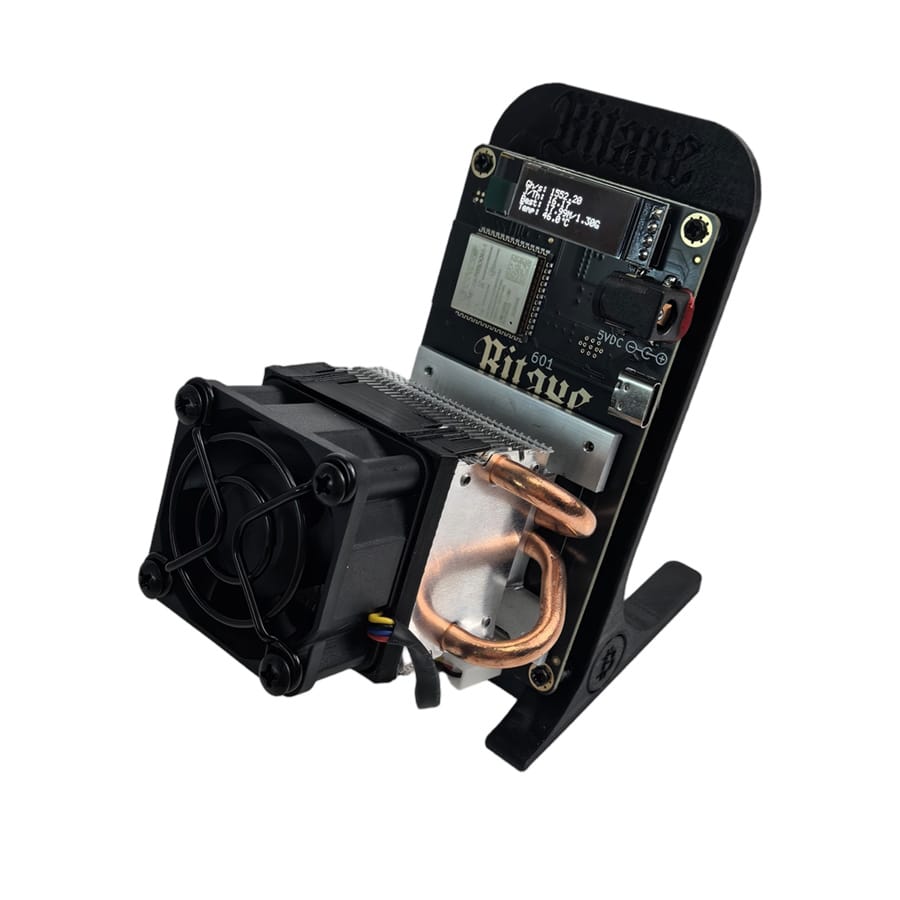
Achieving this isn’t just theory. DigLucky has already established a massive technical moat in the solo mining community by stably squeezing 1.5T out of the Bitaxe Gamma 601 through rigorous factory binning and PDN optimization.
Even more exciting, DigLucky is currently engineering the upcoming Bitaxe Gamma 602 to target a stable 1.8T. This represents a staggering 50% performance leap on a single piece of silicon. It perfectly balances a mind-blowing hashrate with long-term stability under top-tier cooling and power delivery. For players looking to build an ultra-high-density desktop solo miner, this is a flawless piece of engineering art.
Frequently Asked Questions (FAQ)
Q: Can you overclock a Bitaxe Gamma? Yes. Through the AxeOS web interface, users can adjust the Vcore (voltage) and Frequency. However, significant overclocks (beyond 1.3T) require upgraded power supplies and advanced thermal management to prevent hardware damage.
Q: What is the maximum hashrate of the BM1370 ASIC? While the factory standard is 1.0T to 1.2T, hardware manufacturers like DigLucky have achieved a stable 1.5T. The absolute theoretical physical limit of the chip before electromigration failure is estimated to be between 2.0T and 2.2T under extreme laboratory cooling.
Q: Why does my overclocked Bitaxe crash or show hardware errors? The most common causes are voltage droop (insufficient power delivery from the PDN or a weak power supply) and thermal throttling. If the chip exceeds 80°C to 90°C, leakage current increases dramatically, causing instability and crashes.
Ready to Start Your Project?
Get a factory-direct quote for your B2B project, or shop our B2C store for the best prices.